
Your needs, this model
Does it fit your priorities?
How many slices can the CPT-160P1 toast per cycle?
The exact Cuisinart page identifies the CPT-160P1 as a two-slice toaster. If four pieces per batch are essential, compare a separately assessed four-slice configuration; don't infer capacity from the similar CPT-1600 name.
Explore this need in the finder →Does the CPT-160P1 include a frozen-bread setting?
Yes. Its CPT-160-series booklet describes a separate Defrost button that thaws and then toasts frozen bread. The manual gives its own steps; this is a user-pressed feature, not automatic frozen sensing.
Explore this need in the finder →What does the Bagel button do on this model?
The manual says Bagel adds time for thicker bread, asks users to halve bagels, and shows the cut side facing away from the middle. It does not publish a bagel-size limit or guarantee fit for every shape.
Explore this need in the finder →Is CPT-160P1 a long-slot toaster with QuickView or an extra-time button?
No such controls or long-slot designation are documented for this classic CPT-160P1. The manual describes two 1.5-inch-wide conventional openings, one six-position shade dial and an extra-lift lever; it does not document an in-cycle QuickView, +30 Seconds, or a maximum bread length.
Explore this need in the finder →Can it reheat bread without browning?
Yes. The CPT-160-series booklet says the separate Reheat button reheats without browning or toasting. This is distinct from Defrost, which the same booklet uses to thaw and then toast frozen items.
Explore this need in the finder →This assessment covers the exact U.S. Cuisinart CPT-160P1, listed as the 2 Slice Metal Classic Toaster in Stainless Steel P1. It is a document-based review of the manufacturer's product page and linked CPT-160 series booklet, not a hands-on test. Its documented shape is straightforward: two slots, six manual shade levels, and separate Bagel, Defrost and Reheat buttons. That is meaningfully different from the similar-sounding CPT-1600 XL-slot toaster, so details from the latter should not be assumed here.
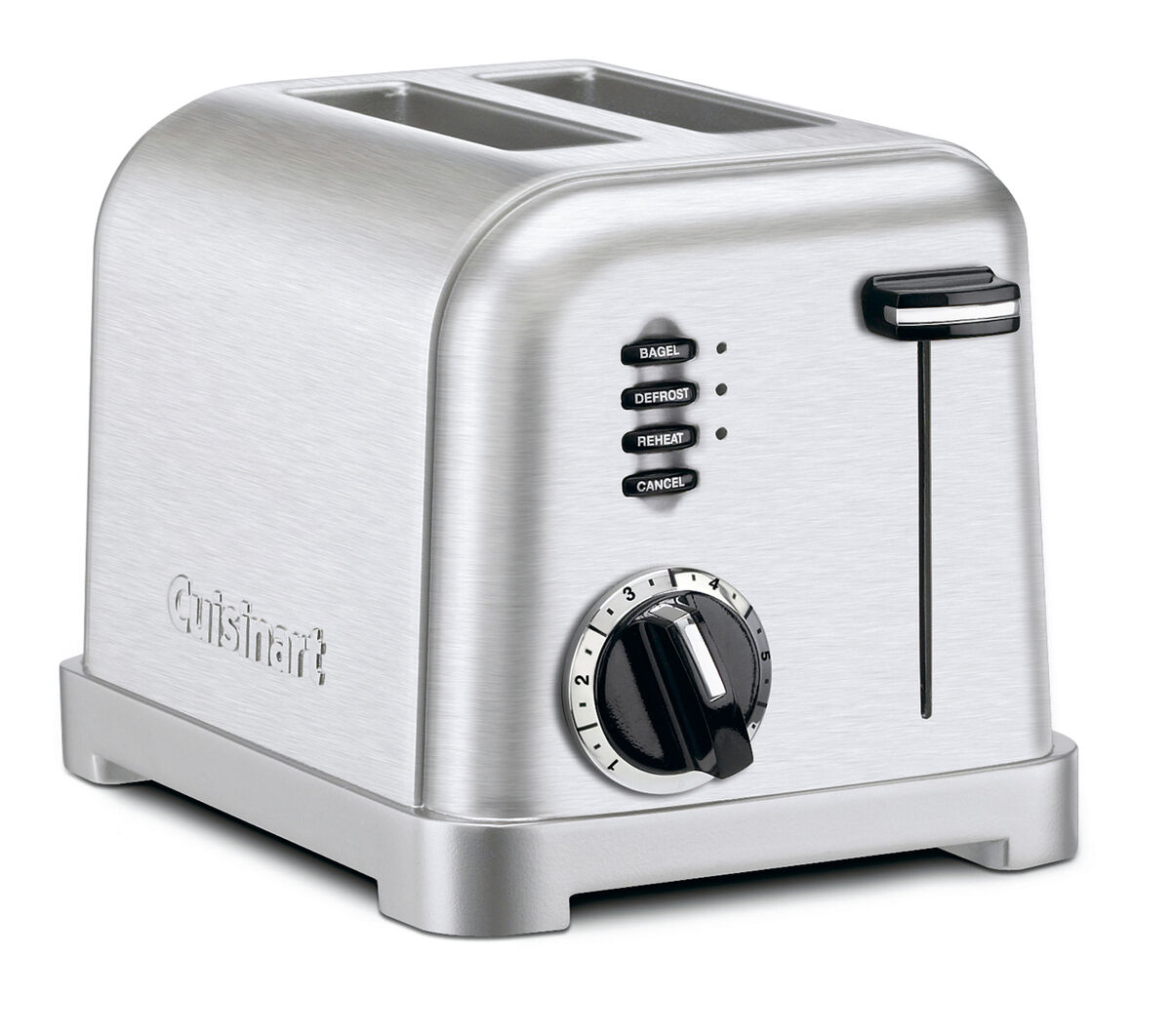
Classic slots, not a measured fit promise
The maker describes this as a two-slice metal classic toaster. Its linked booklet calls the openings dual toasting slots, each 1½ inches wide. Neither the page nor the booklet gives a slot-depth measurement, a maximum slice length or a food-thickness limit. The word “wide” and the 1½-inch figure concern slot width; they do not tell you whether a tall sourdough slice or a wide homemade loaf will fit. The manual says food should sit freely between the guide wires and should never be forced into the opening. That distinction matters because Cuisinart lists the CPT-1600 separately as an XL-slot model. The CPT-160P1 page does not describe its slots as XL or long, and its booklet does not document a long-opening layout. If long bread or a particular loaf is the reason for shopping, compare a model explicitly assessed for that layout and check actual food dimensions against the exact opening; the CPT-160P1 sources do not support a size guarantee.Counter dimensions and the cabinet warning
Cuisinart publishes the body as 10.75 inches long by 7.13 inches wide by 7.13 inches high. In the pictured front-facing orientation, this review treats 7.13 inches as side-to-side width and 10.75 inches as front-to-back depth. Confirm the manufacturer's dimension order and orientation on the exact offer before using those numbers in a kitchen plan. They measure the outside body only. They do not add room for the cord, access to the controls, or space to pull out the crumb tray. More importantly, the CPT-160 series booklet says not to operate the toaster under a wall cabinet or inside an appliance garage. It supplies no numeric overhead or side clearance that could turn a close-fitting shelf into an approved setup. If the available location is tight, consult the entire manual and placement instructions rather than treating a body-dimension match as installation approval.Six shades and three distinct bread buttons
One rotary dial provides six shade levels, grouped in the booklet as settings 1–2 for light, 3–4 for medium and 5–6 for dark. The dedicated Bagel control adds time for thicker bread. Cuisinart's directions ask the user to halve bagels and show cut sides positioned away from the middle of the pair. This explains the intended control routine; it does not guarantee a uniform result on every bread or show that every bagel shape will fit. Defrost is a different task: the booklet describes thawing frozen bread before toasting and gives a specific sequence for frozen bagels that uses both Bagel and Defrost. Reheat is different again; its button warms bread without browning or toasting. Cancel interrupts a cycle. The raised lever is described as extra lift to help remove small items, not as a QuickView pause-and-resume function. The manual documents one shared browning dial, so the two slots do not have separate shade settings. The comparison with CPT-1600 is especially useful here. CPT-1600's own evidence describes seven shade positions, XL slots, a Single setting, +30 Seconds and High-Lift QuickView. Those functions do not appear in the CPT-160P1 sources reviewed. Conversely, CPT-160P1's separate Reheat button is not a substitute for Defrost or an extra-time button. The model number resemblance is not a reason to blend their operating plans.Care, food limits and warranty terms
The booklet's routine is simple but specific: unplug the toaster and let it cool before cleaning, slide out the crumb tray, wipe and replace it, and do not operate the unit without the tray in place. It warns against putting hard or sharp objects into the slots to remove food. It also says not to toast buttered bread and cautions that toaster-pastry filling can become hot before the surface looks browned; it calls for supervision and the lightest setting for pastries. Very thick food may take longer and the source does not publish a maximum thickness. The booklet says the unit is designed for 120-volt outlets. The sources reviewed do not establish wattage, frequency, product weight or cord length. The manufacturer page lists a three-year limited warranty; the linked booklet sets conditions for qualifying U.S. household buyers, including seller and proof-of-purchase terms. Confirm the exact unit and current warranty terms rather than relying on a headline summary. A model-specific CPSC recall lookup could not be completed because the research query was rate-limited; this assessment does not claim that the model is free of recall notices.Who should compare the CPT-160P1
This is a reasonable model to compare when two slices per cycle, six manual shade choices, a dedicated frozen-food control, a Bagel option and no-browning Reheat suit the routine. Its published 7.13-inch width and 10.75-inch length are useful starting points for counter planning, not a full clearance diagram. If batch capacity, automatic frozen sensing, an in-cycle visual check, independent pair controls or documented long slots are essential, verify those as separate requirements; the CPT-160P1 booklet does not establish them. A four-slice model or another operating arrangement may be a better comparison, but should be evaluated from its own manual. Before choosing a specific offer, confirm that the label says CPT-160P1 and Stainless Steel P1, check the dimensions in the correct orientation, compare your bread with the unreported slot depth, and make sure the manual's cabinet restriction fits your kitchen layout. Then verify package condition, seller, return terms and applicable warranty on the offer itself. This review contains no hands-on use, measured toast result, price, stock claim or customer-experience summary.Sources: Cuisinart's U.S. CPT-160P1 product page, the page-linked CPT-160 Series instruction booklet, and the previously observed Cuisinart U.S. Toasters listing. The exact-model CPSC lookup did not return results during this research cycle, so recall status remains unknown.
Key specifications
Key details at a glance
| Capacity | 2 slices per cycle |
|---|---|
| Body width | 7.13 in |
| Body depth | 10.75 in |
| Body height | 7.13 in |
| Supply voltage | 120 V |
Use the exact model’s instructions for operating limits, supplied equipment and version differences.
Sources for this review
Sources for this assessment
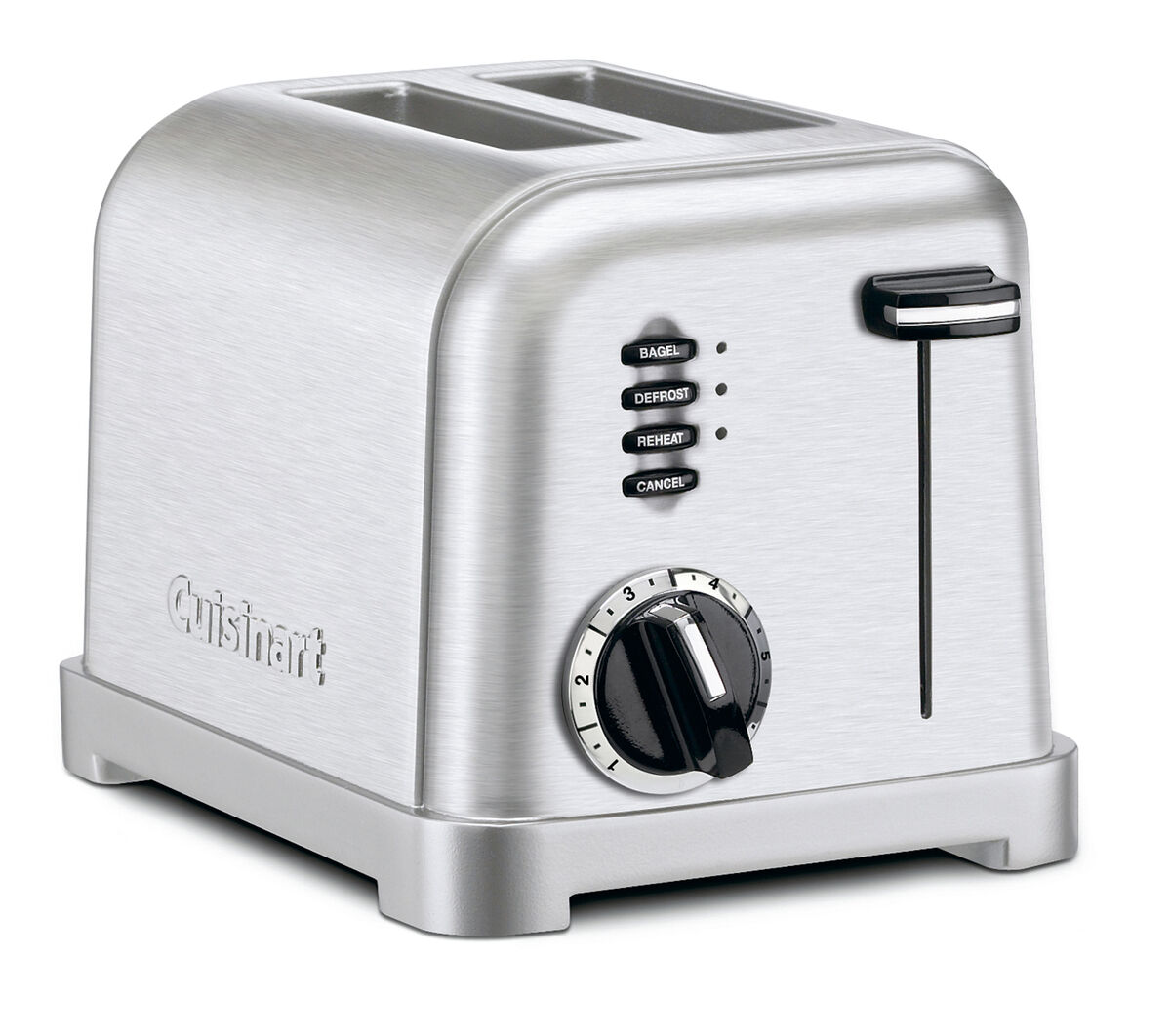
Compare the routine, not just the control panel.
Use the finder for combinations of capacity, features and counter limits, then check each exact model's review and instructions.